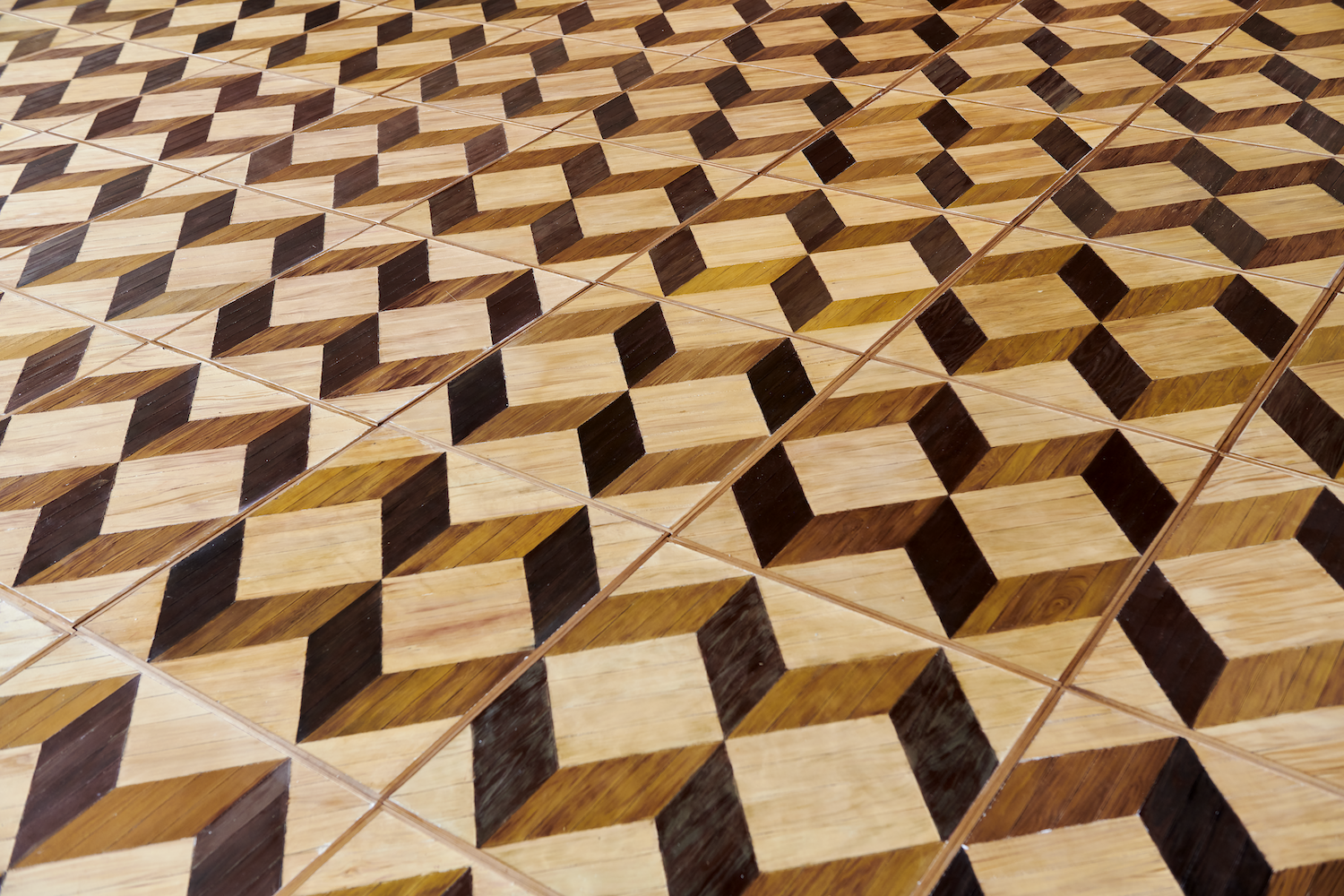
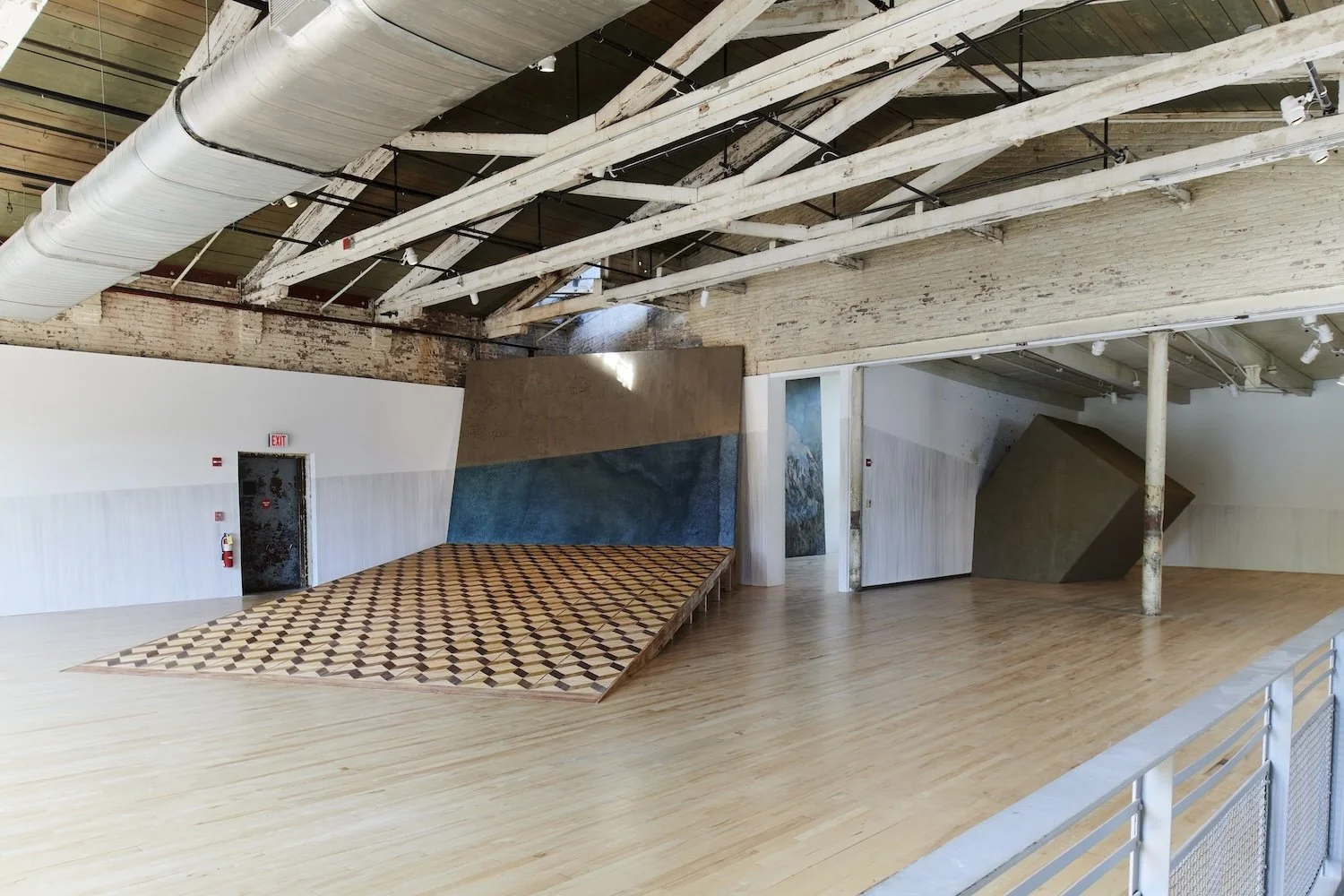
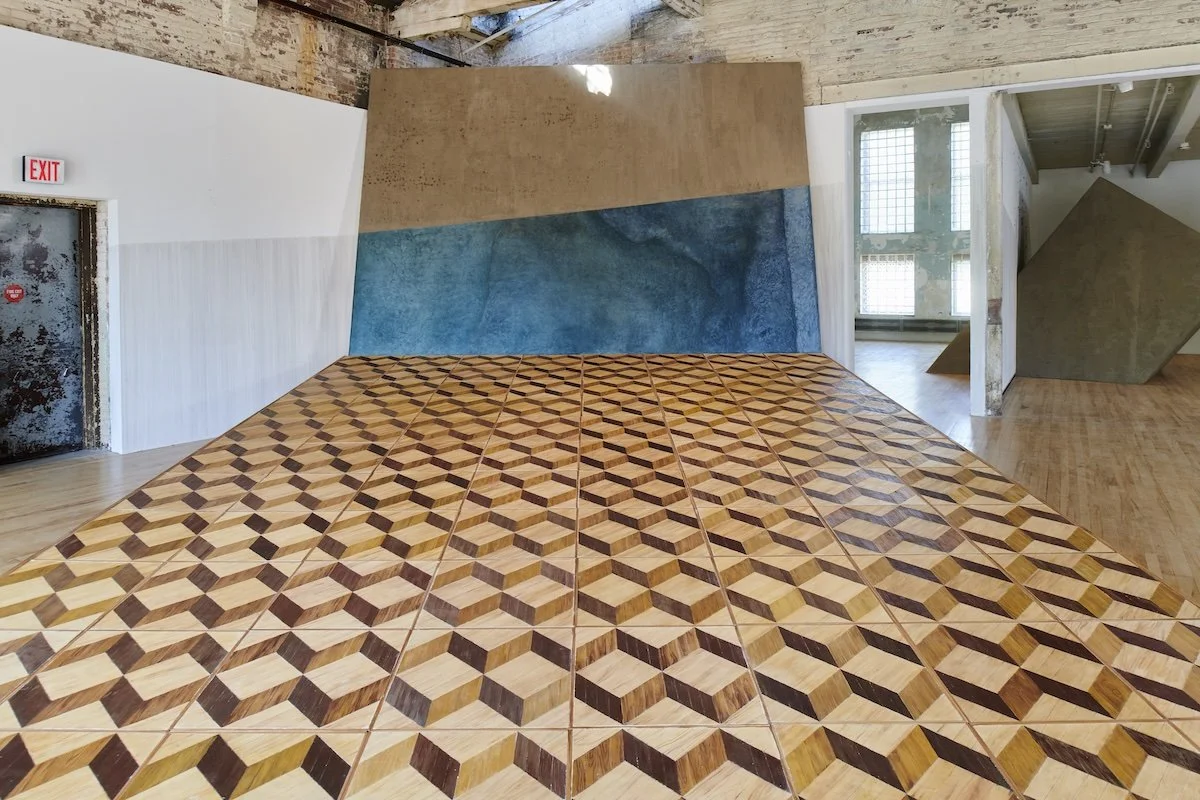
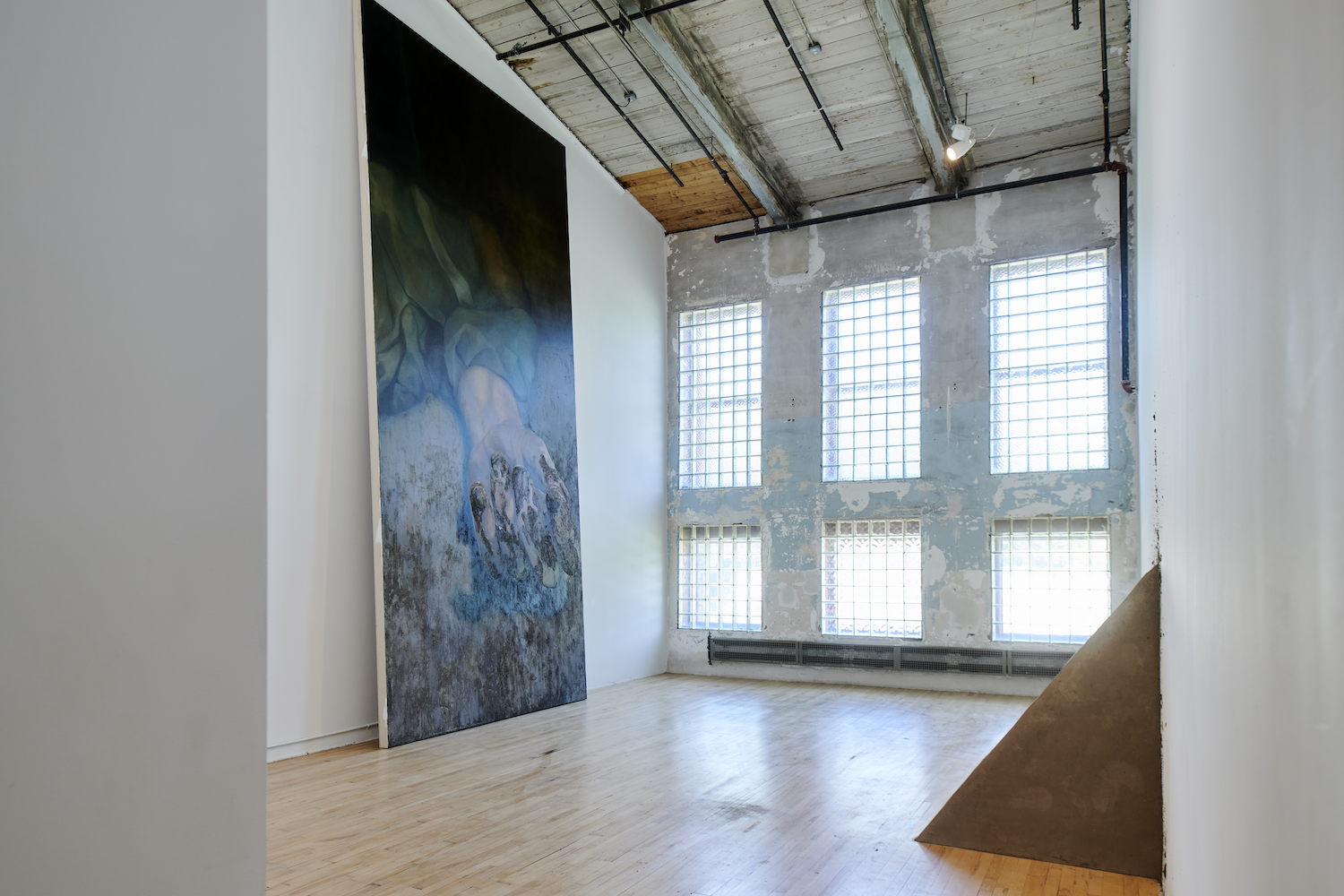
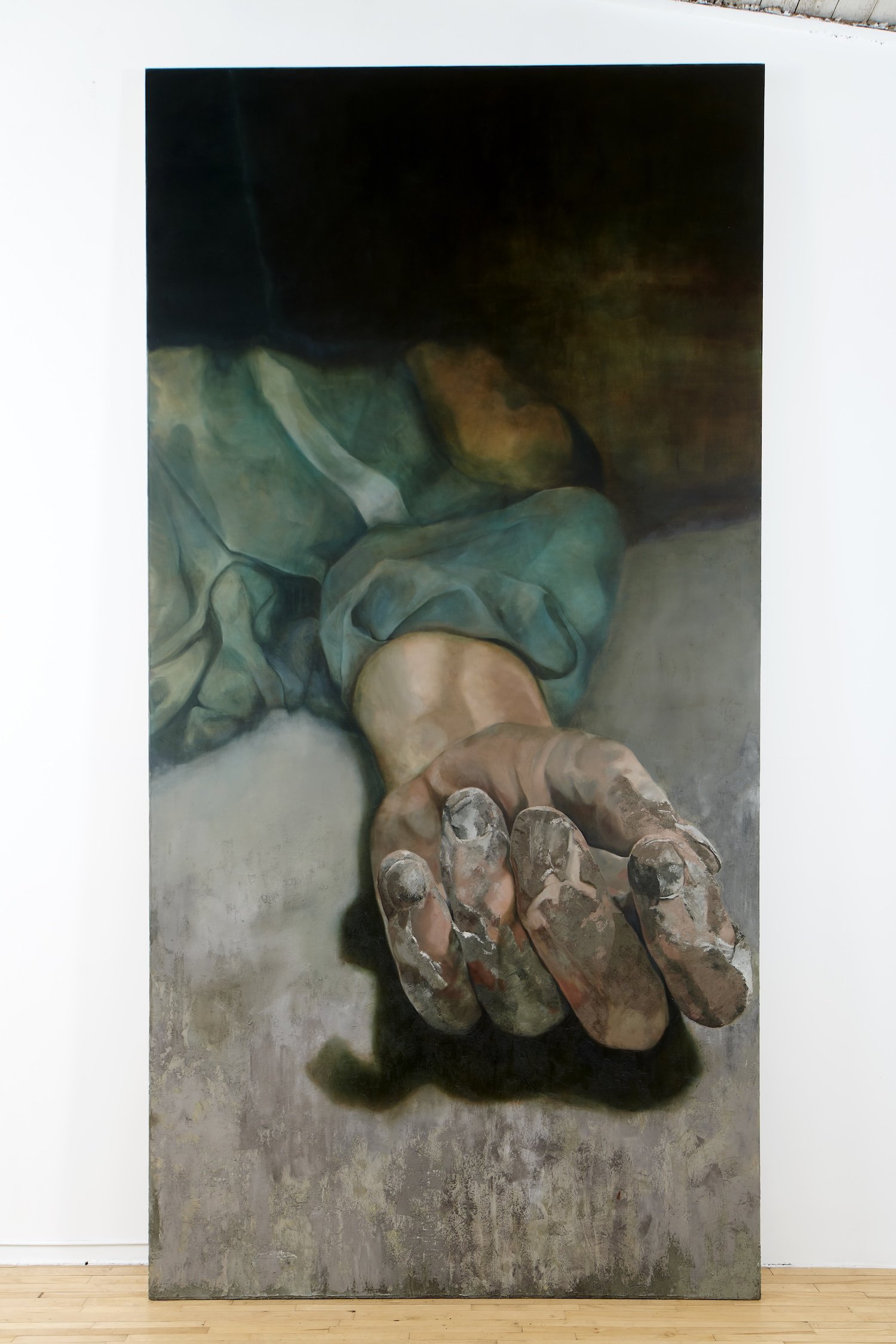
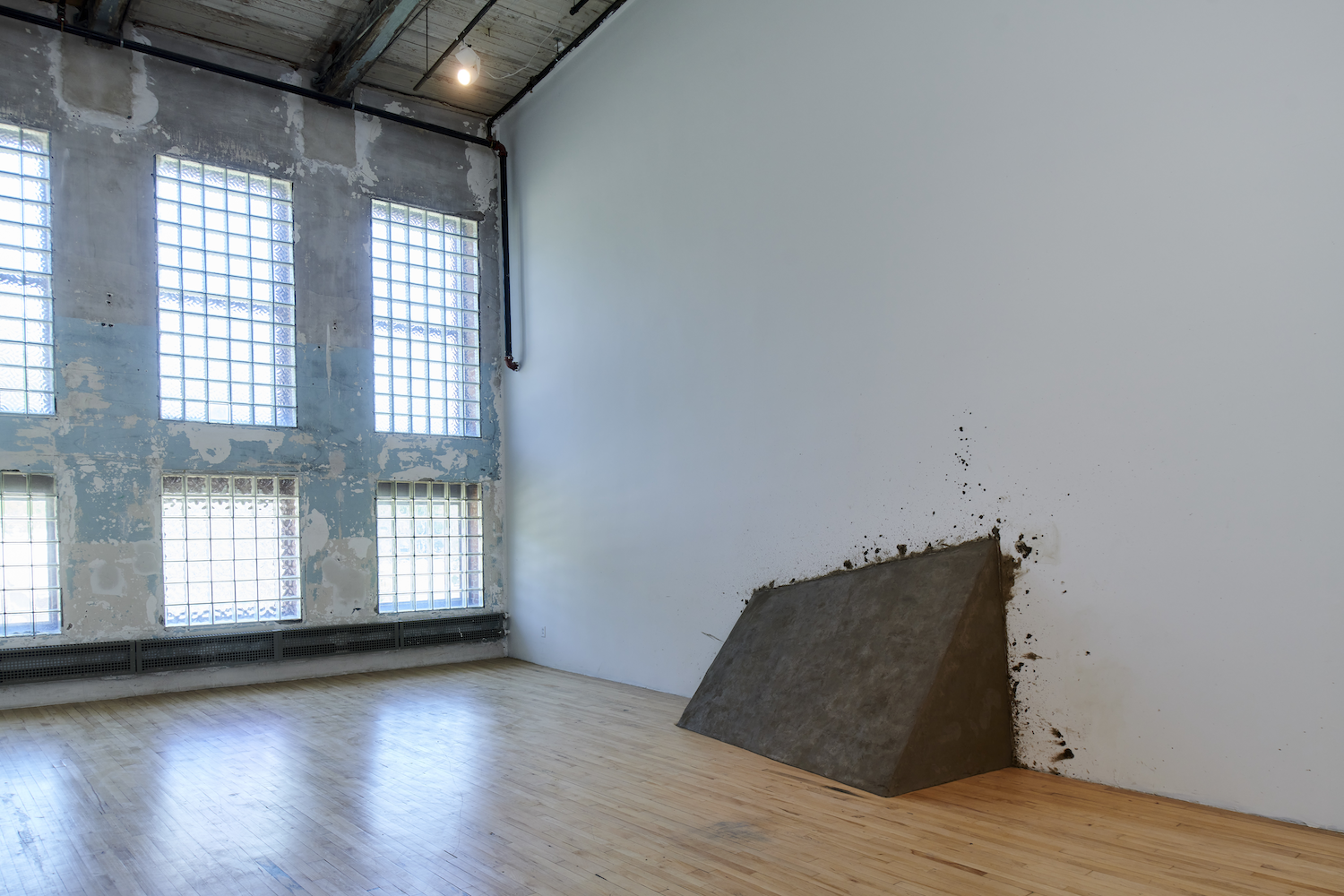
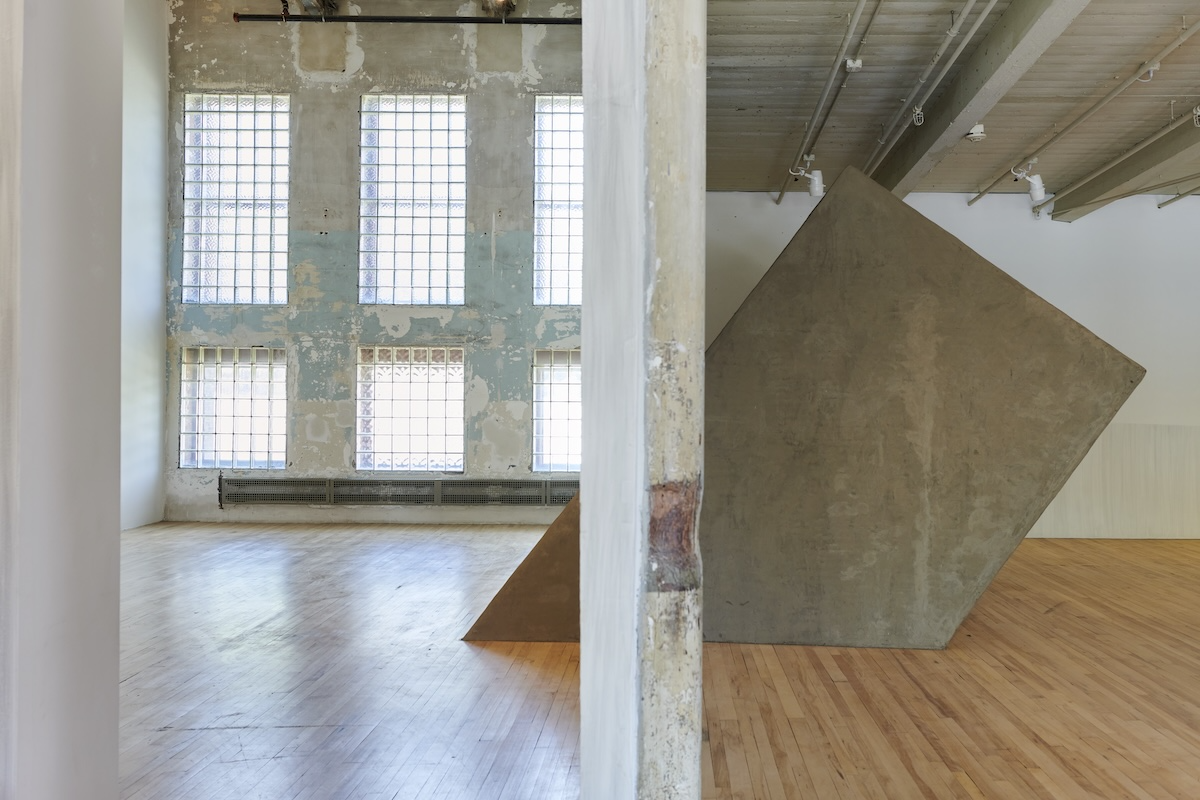
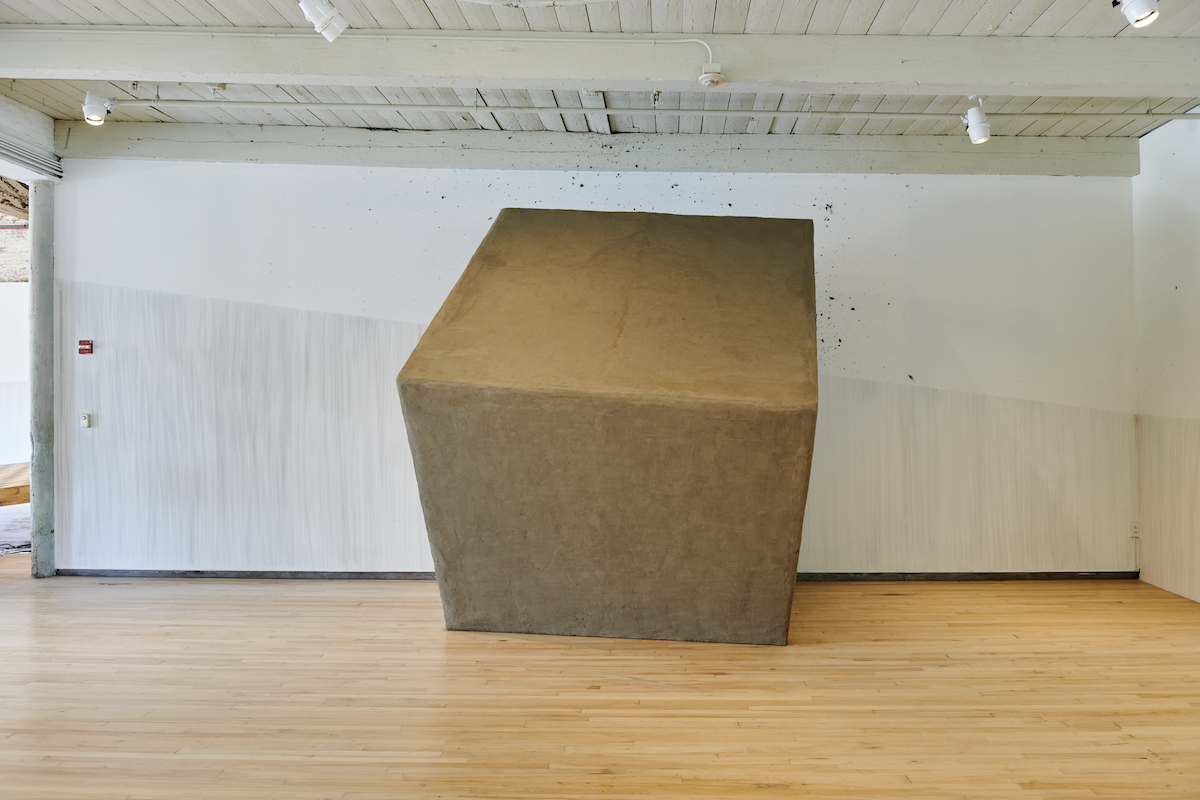

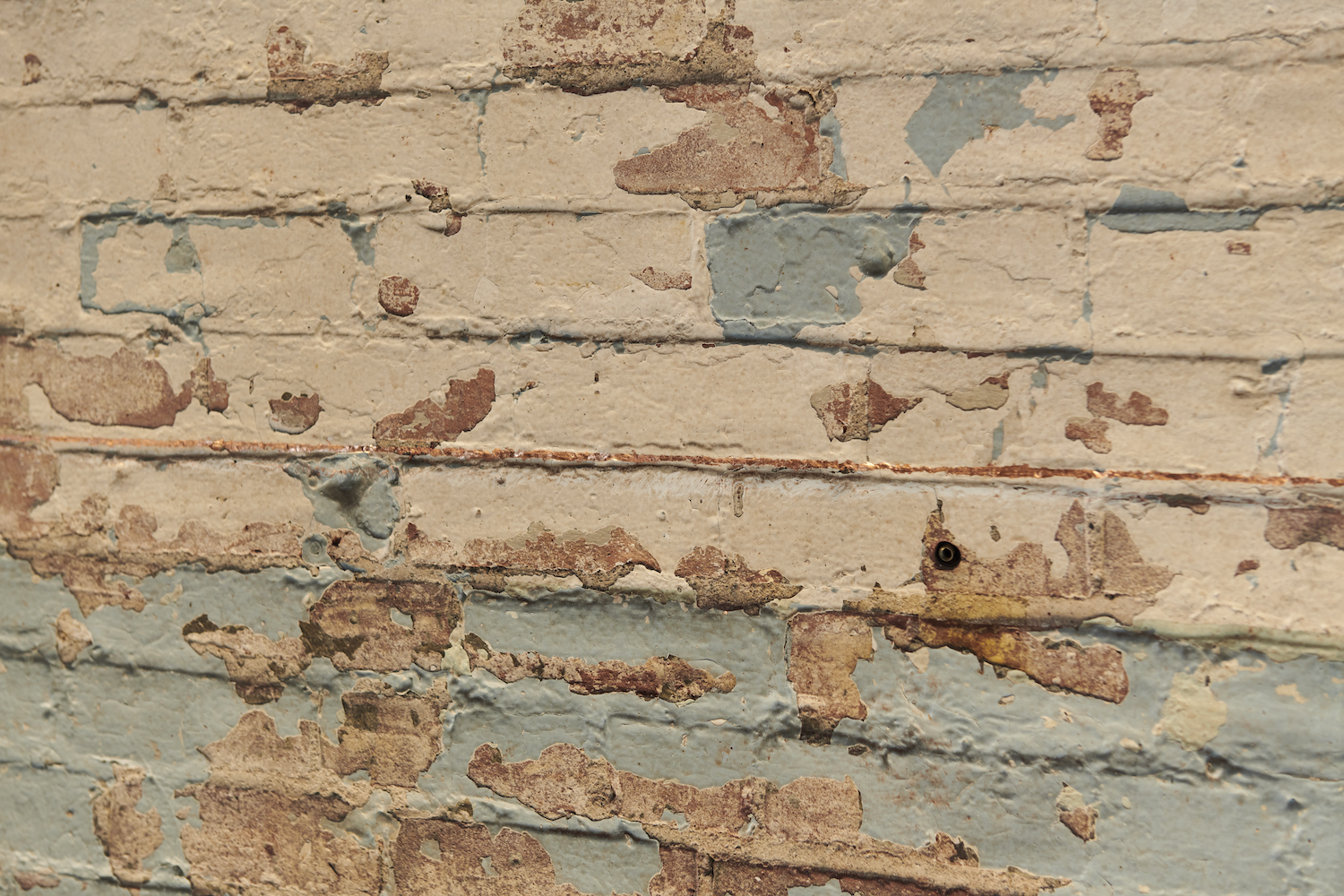
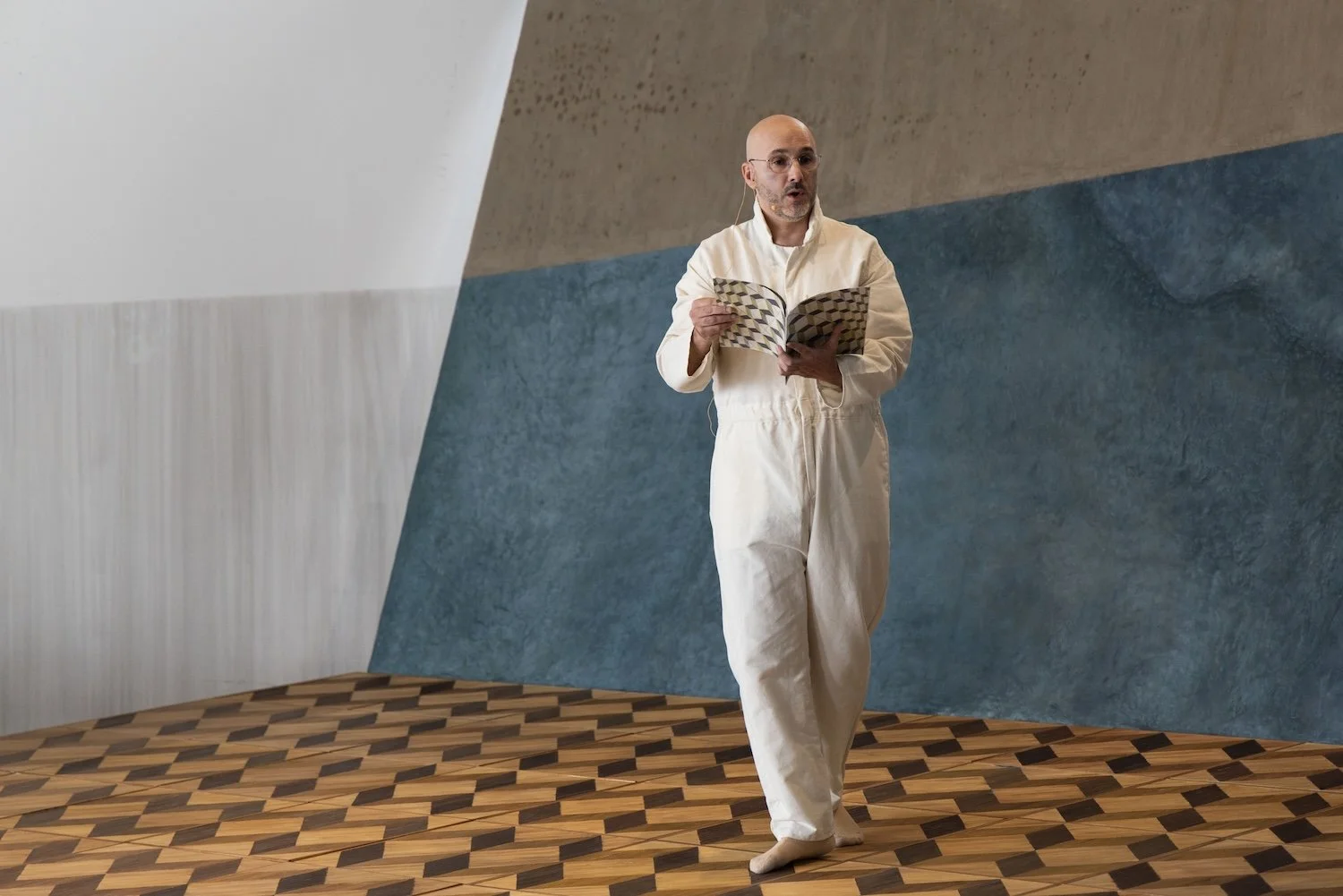
“Simulation has always been a strategy of subversion and resistance in Latin America. The history of fresco is complex, as it developed across multiple locations from the 4th century BCE to the 1st century CE — ranging from classical Greek antiquity to pre-Columbian era Mexico. Drawn to the fresco for its ancestral history, I chose to specifically focus the exhibition on Teotihuacan fresco traditions, which I have been learning and studying in Oaxaca, Mexico.” —Daniela Rivera
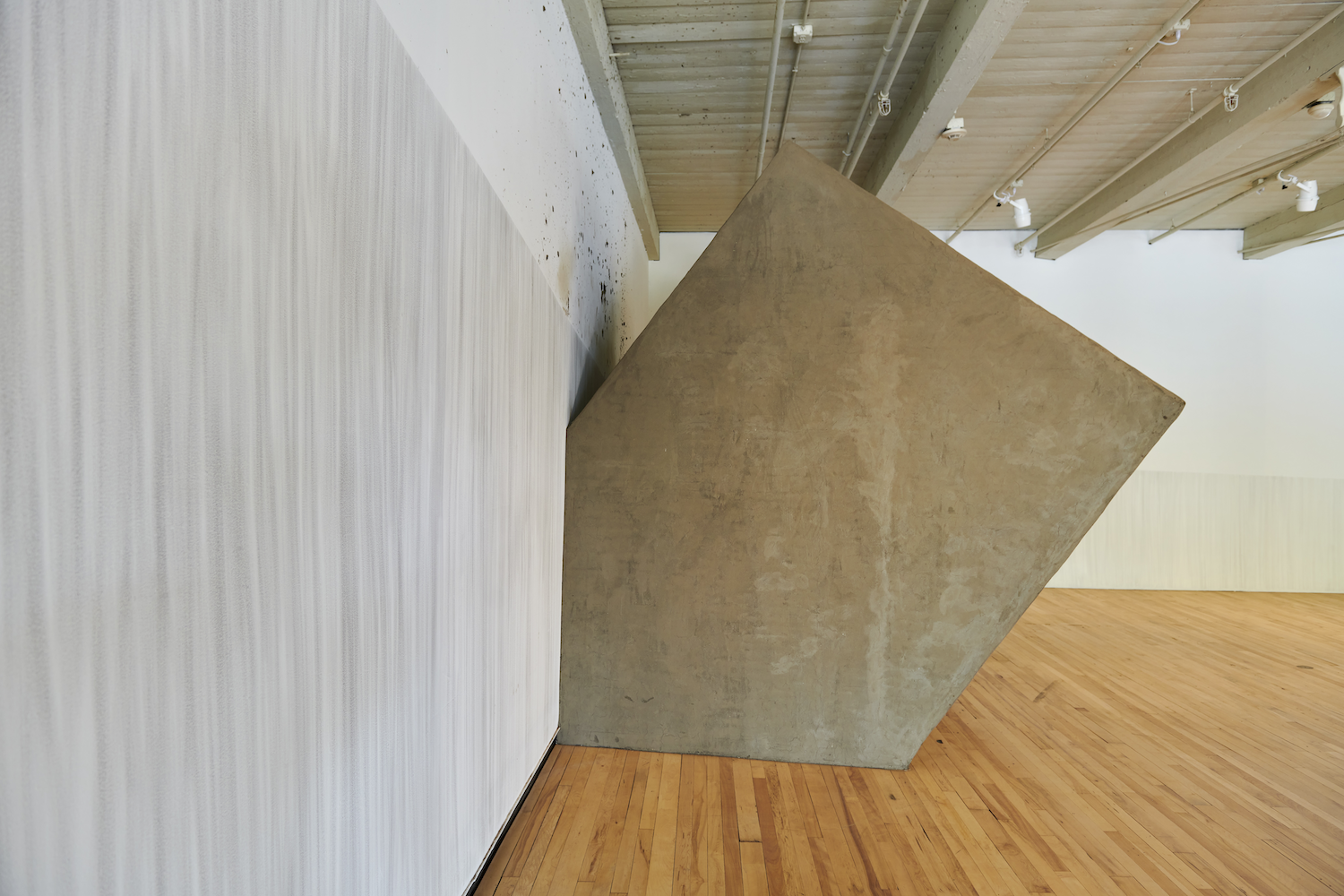
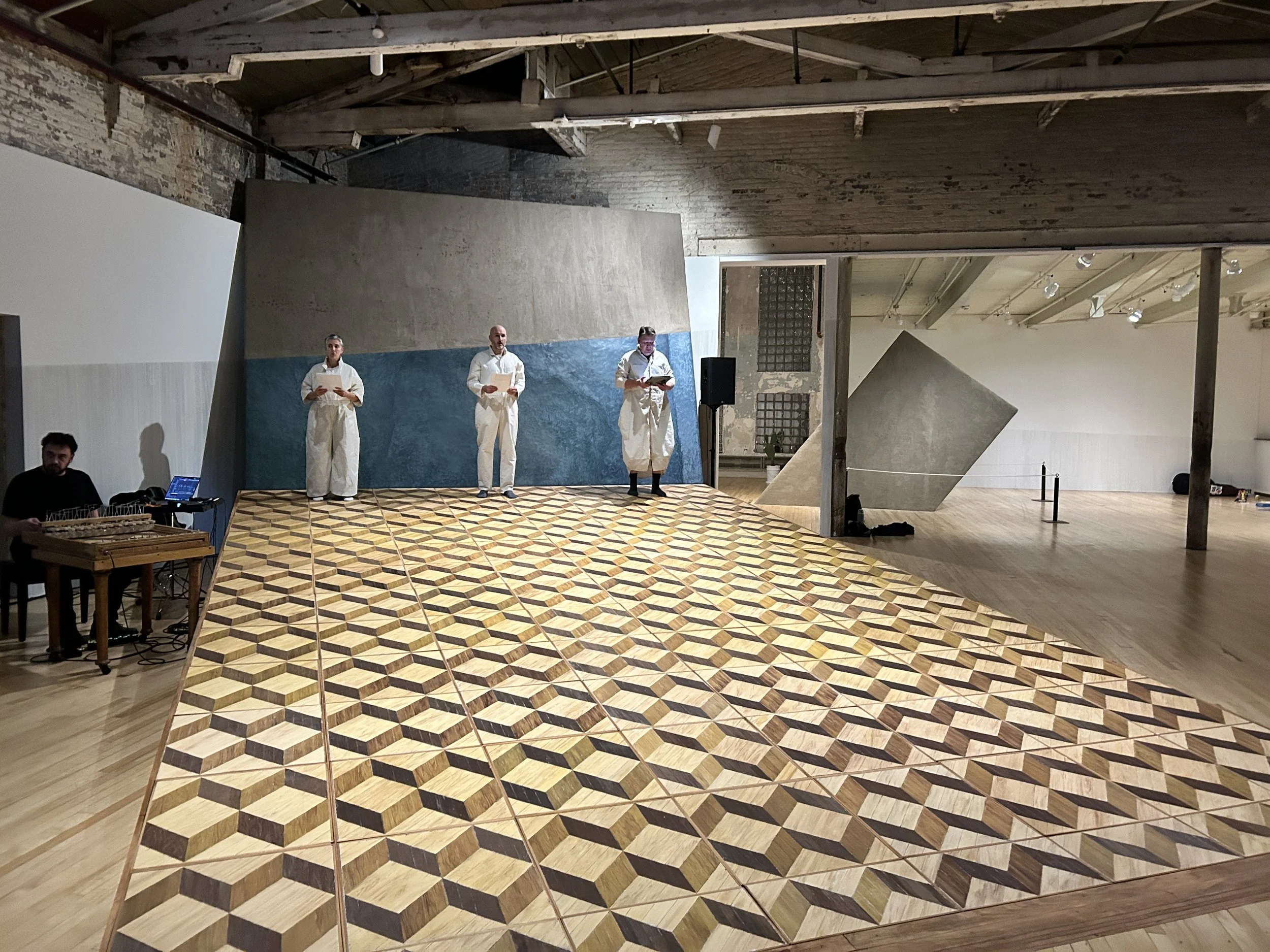
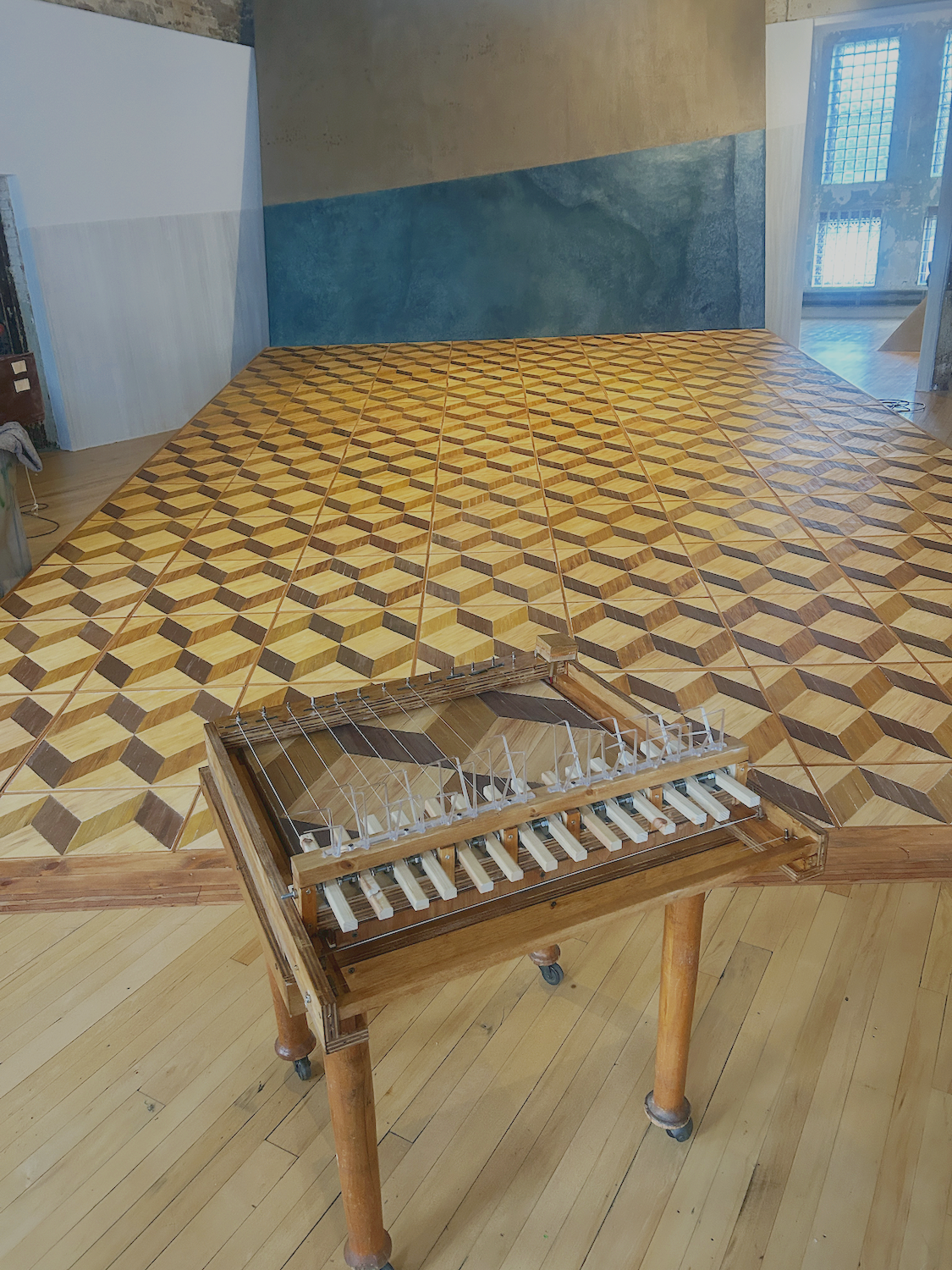
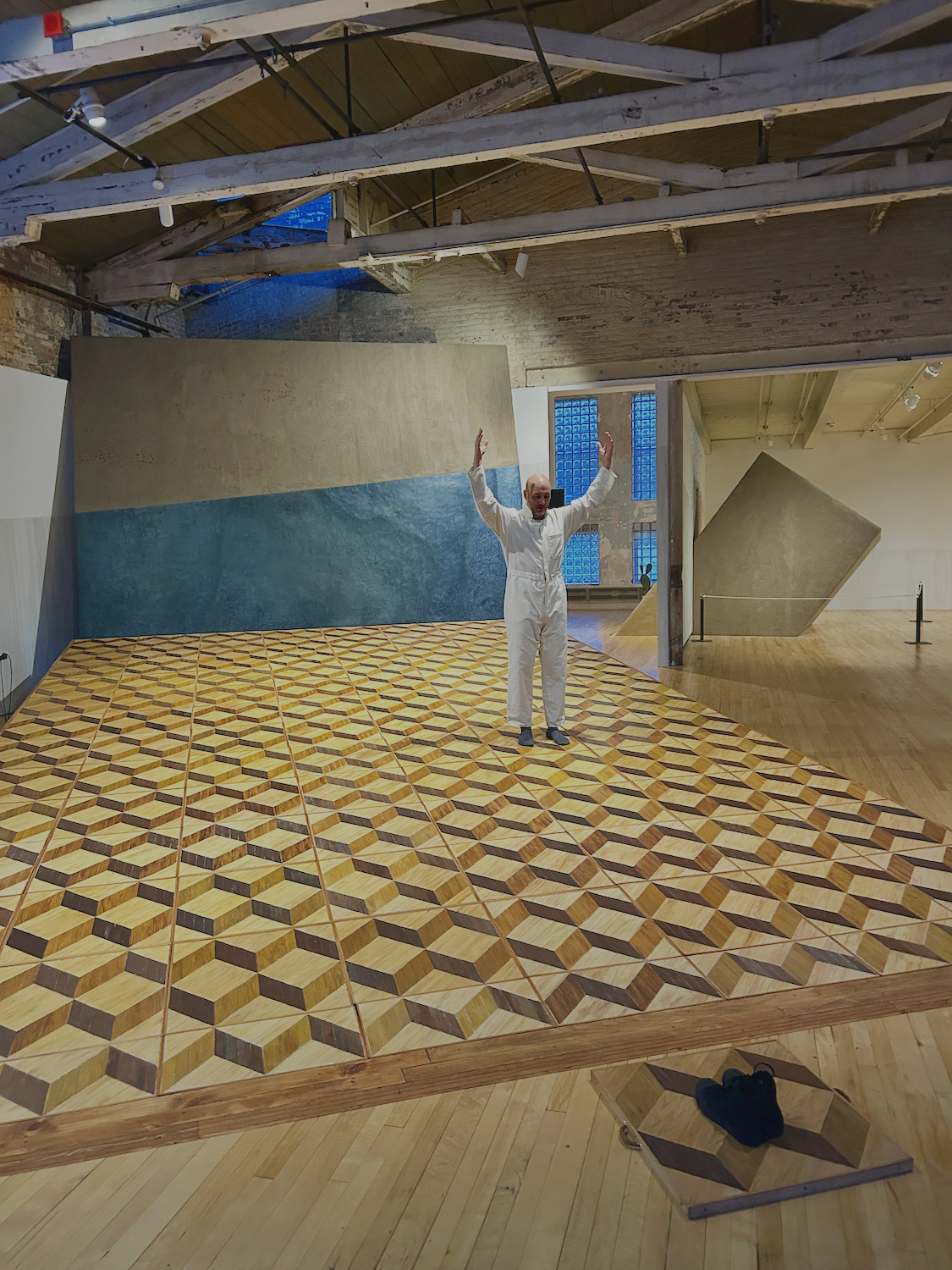
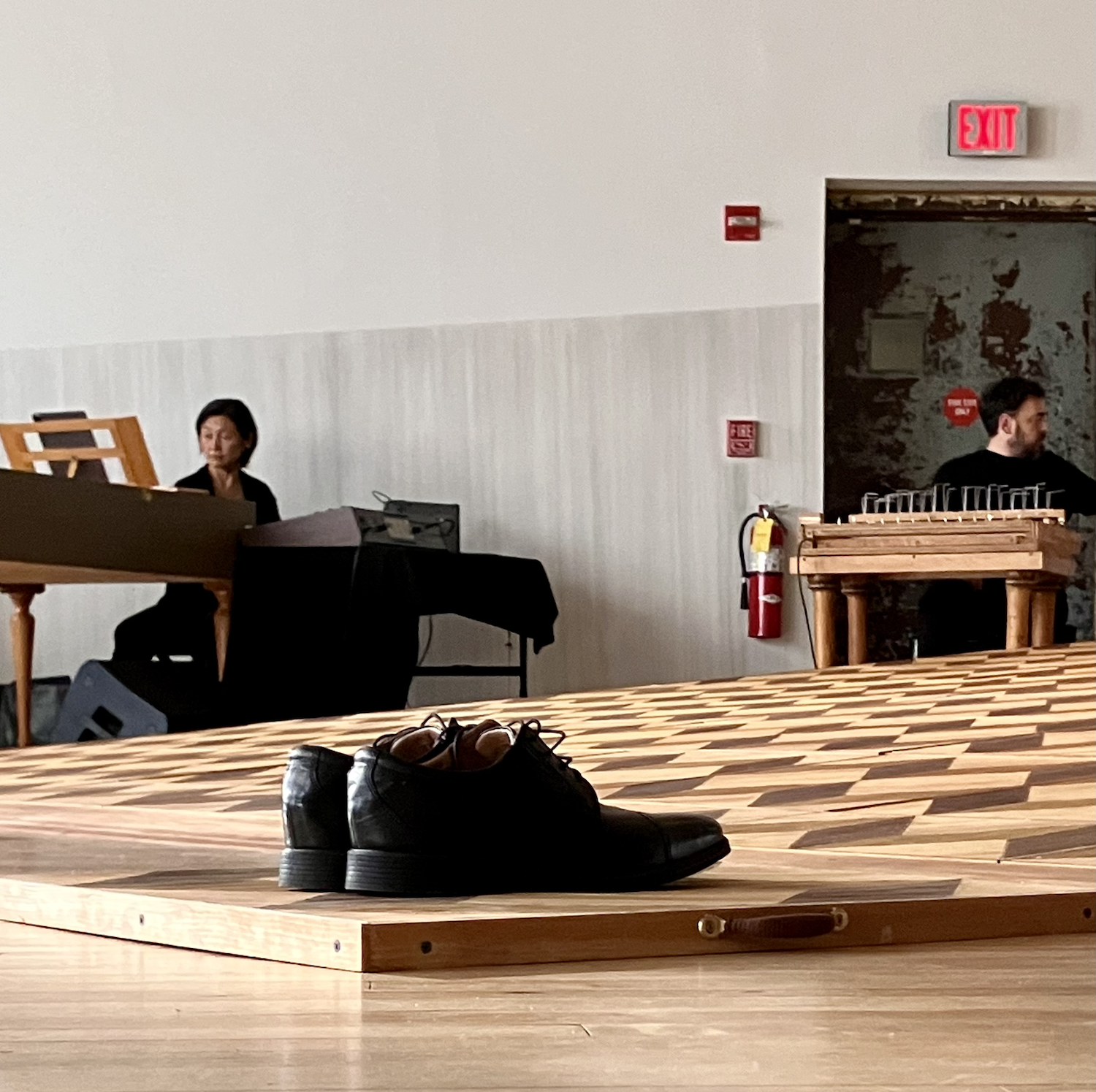
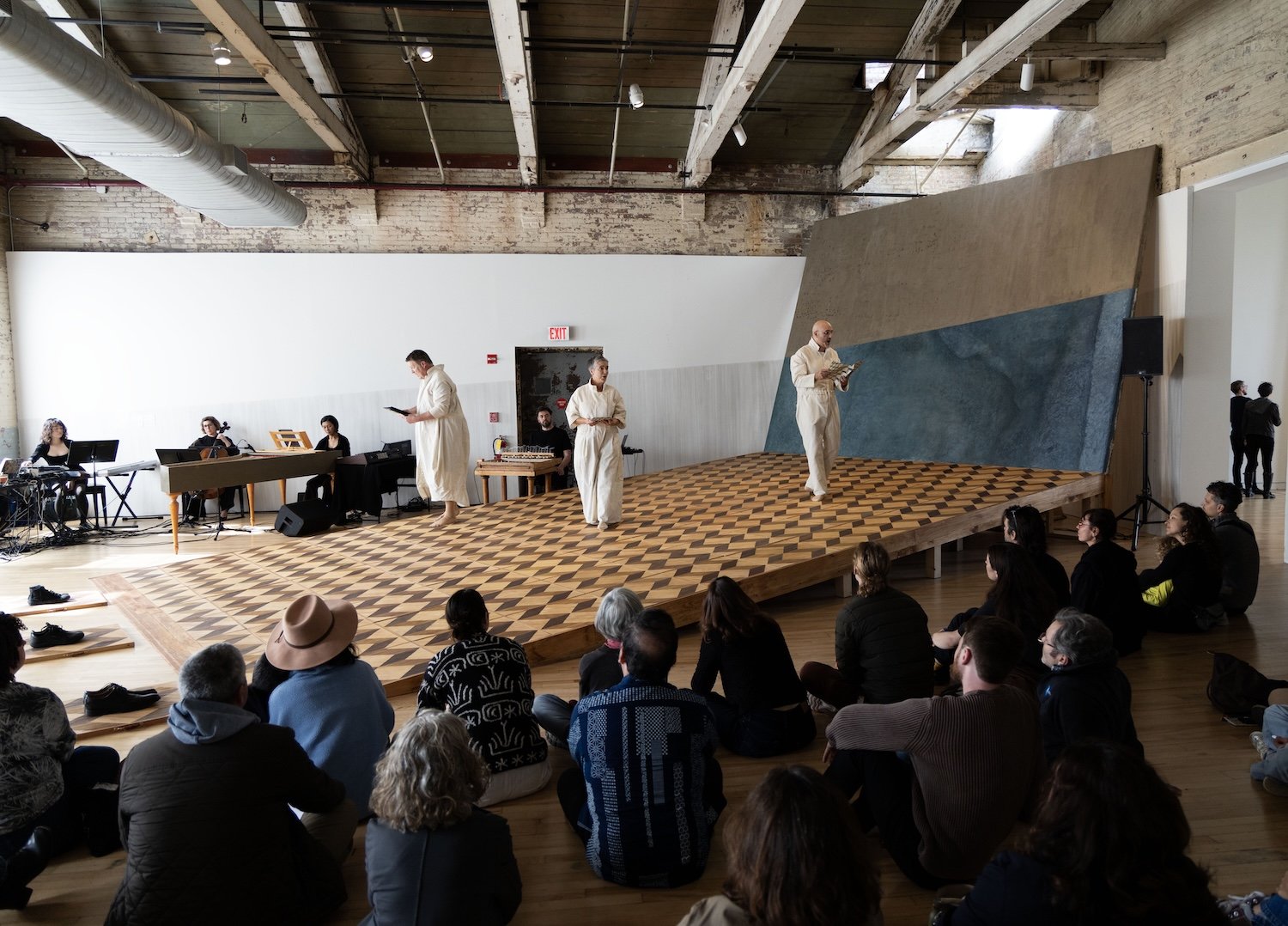
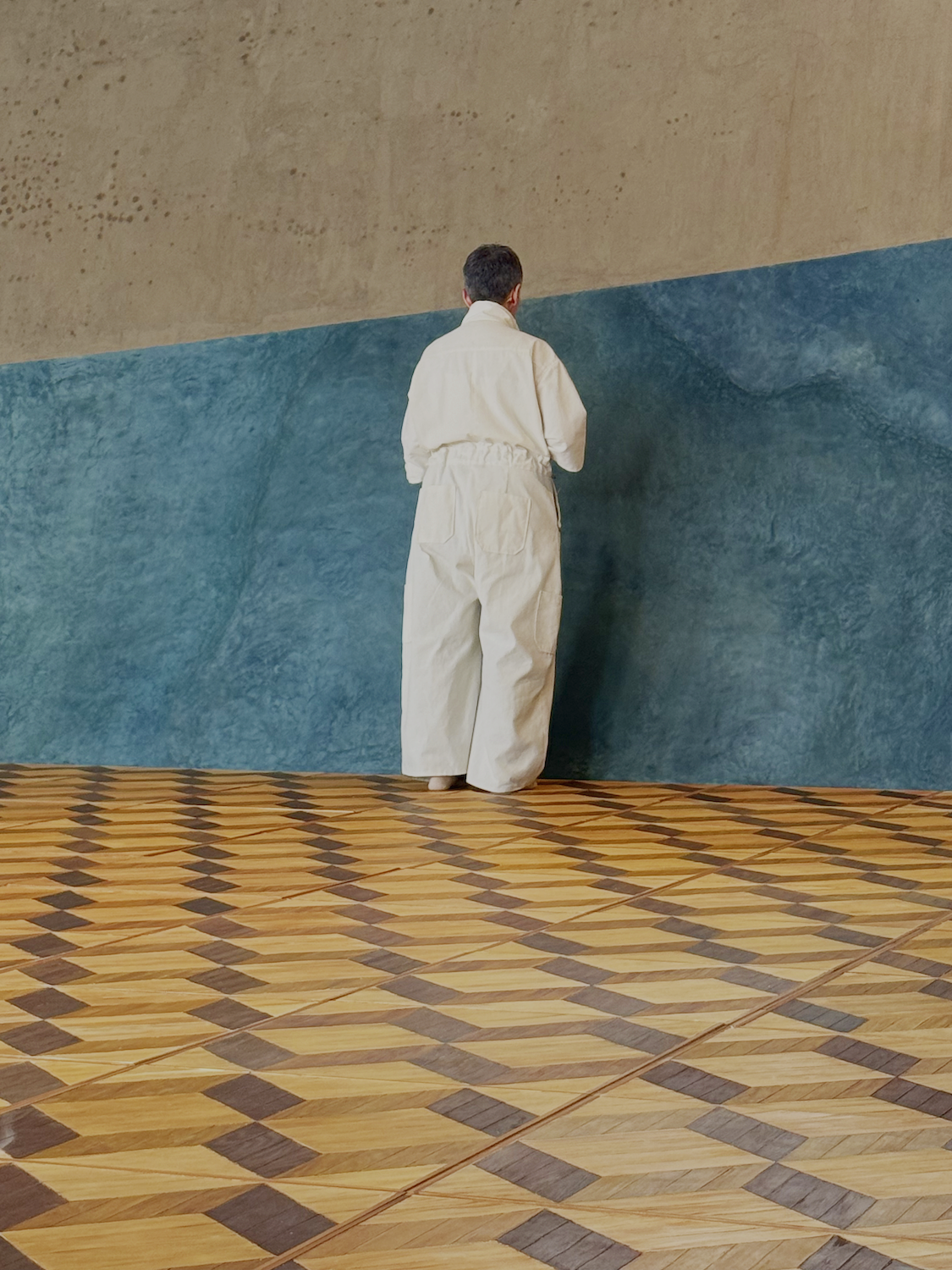
A solo exhibition at MASS MoCA, To When/Hacia Cuando, is an attempt at this comprehensive integration and at opening the work to the impact of the public. On view through June 2027, the project consists of an accessible, tilted platform surfaced in buon fresco that reaches a wall holding a representation of an inclined horizon made from the meeting of soil and lime plaster. Constructed as a resonance box, the platform listens to and amplifies visitors’ steps, revealing the sound of the material and the process that built it. Its soundscape moves between silence, when the platform is “listening” and recording, and moments when the steps of previous visitors are revealed. Visitors never hear their own steps; instead, they become aware of those who inhabited the space before them. Each person leaves a trace that becomes part of another person’s experience, making participation tangible and transforming the work into a record of collective presence.
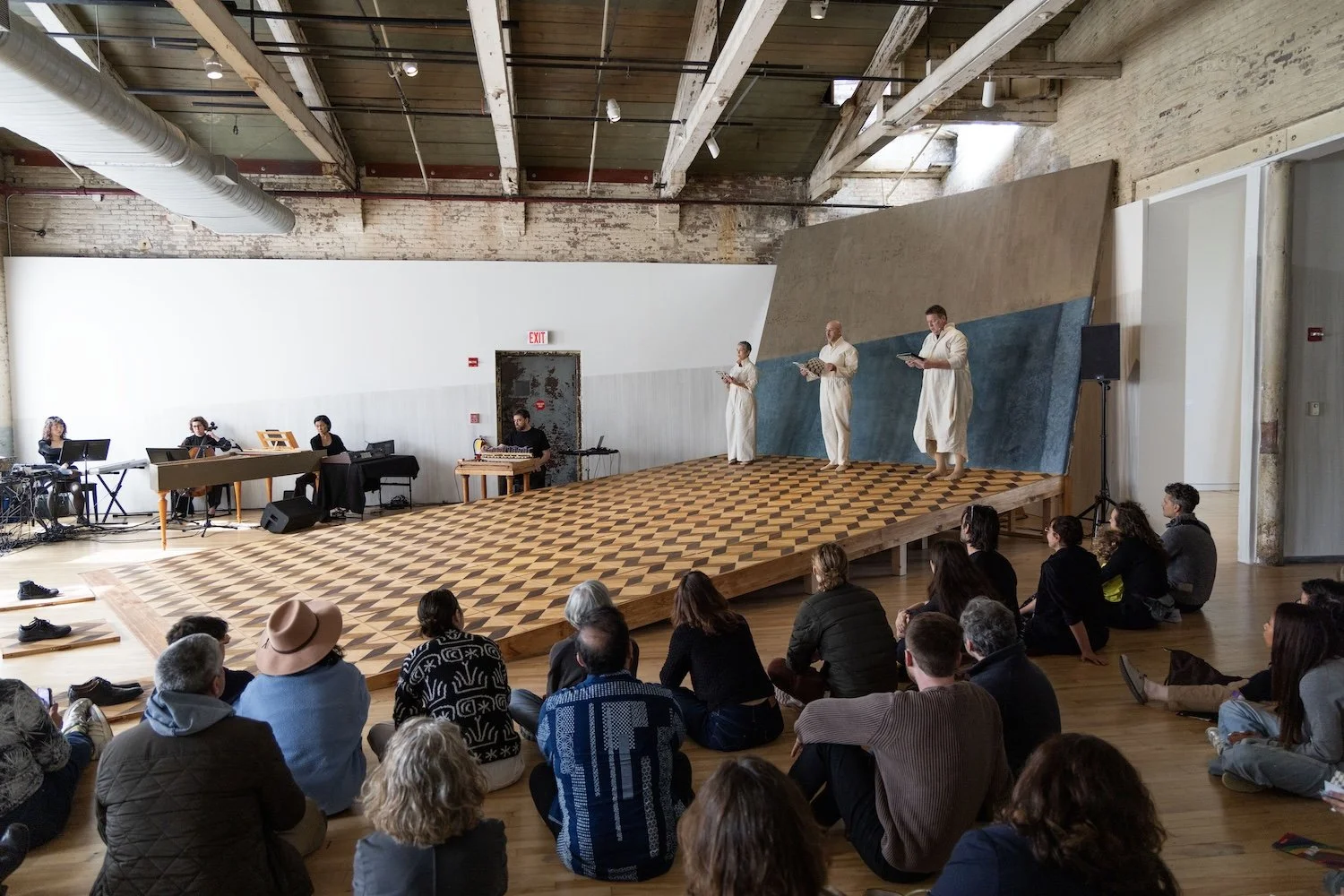
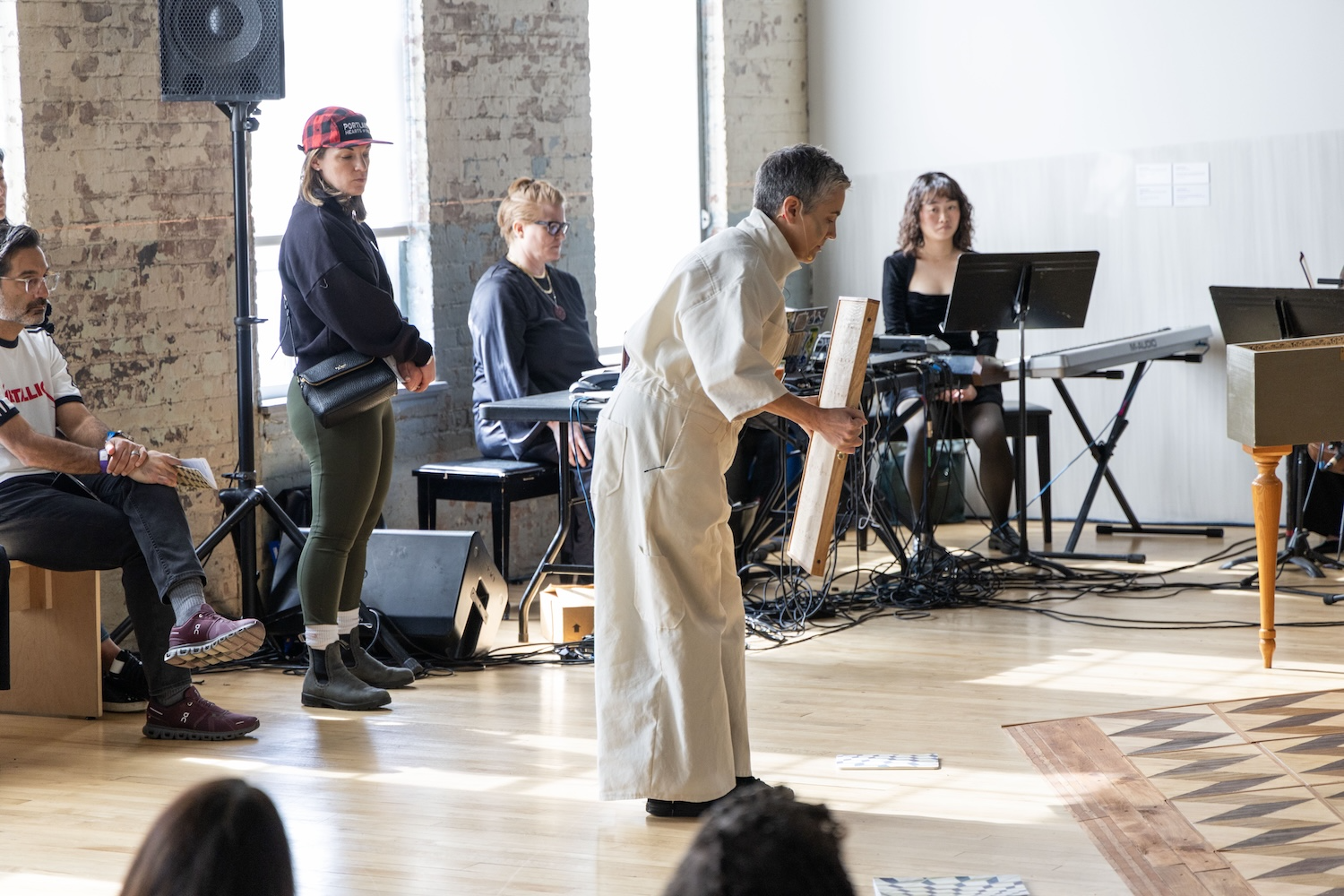
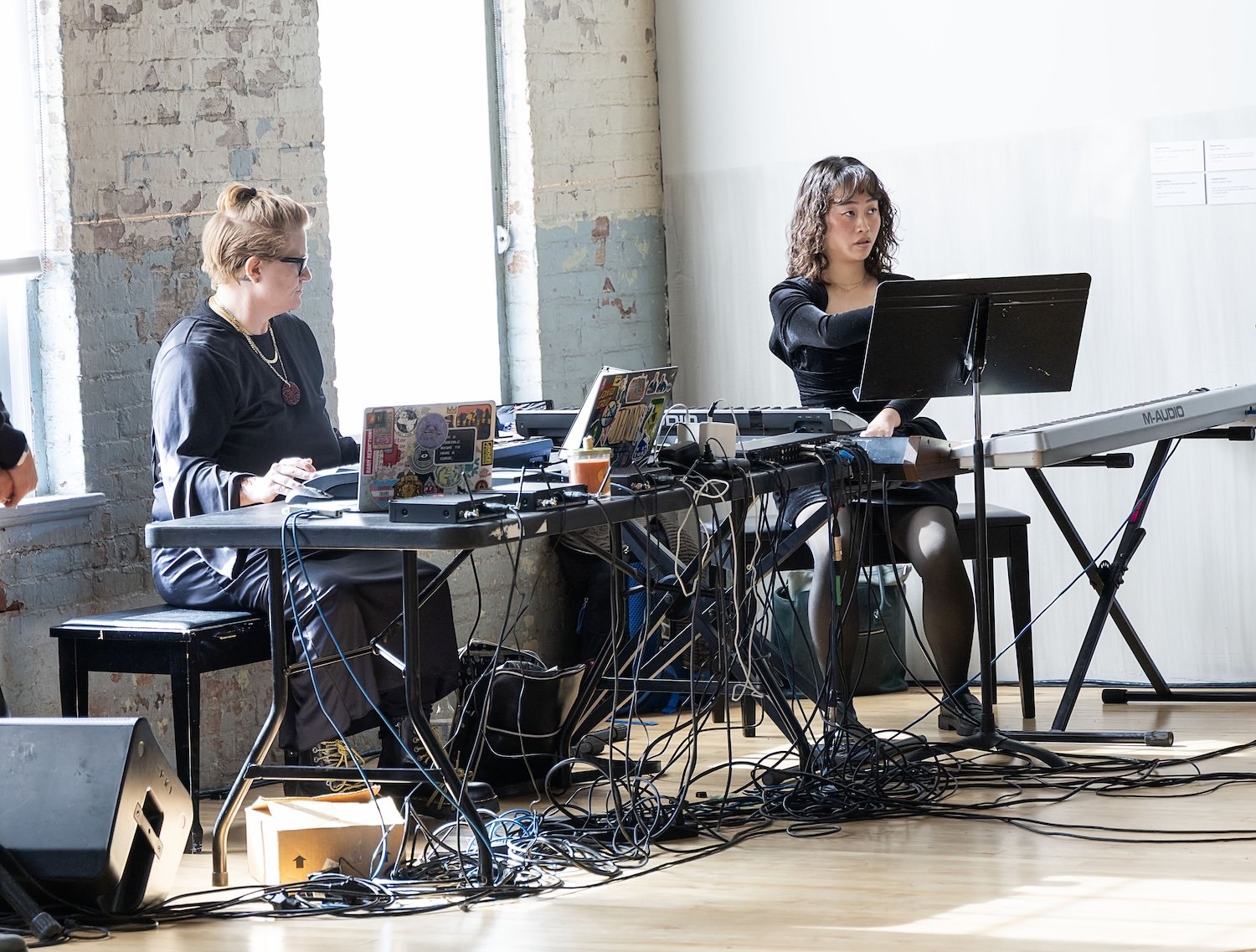
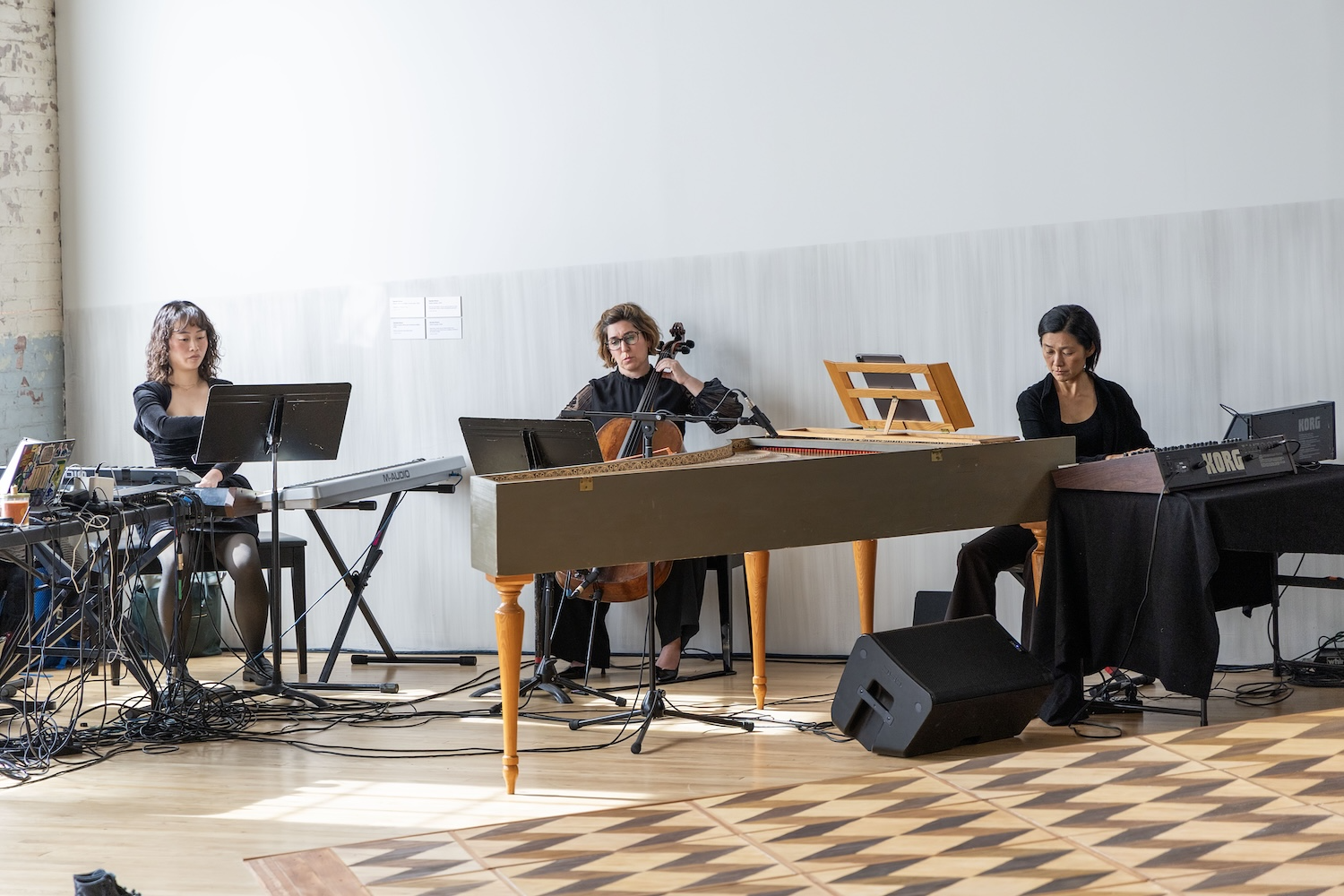
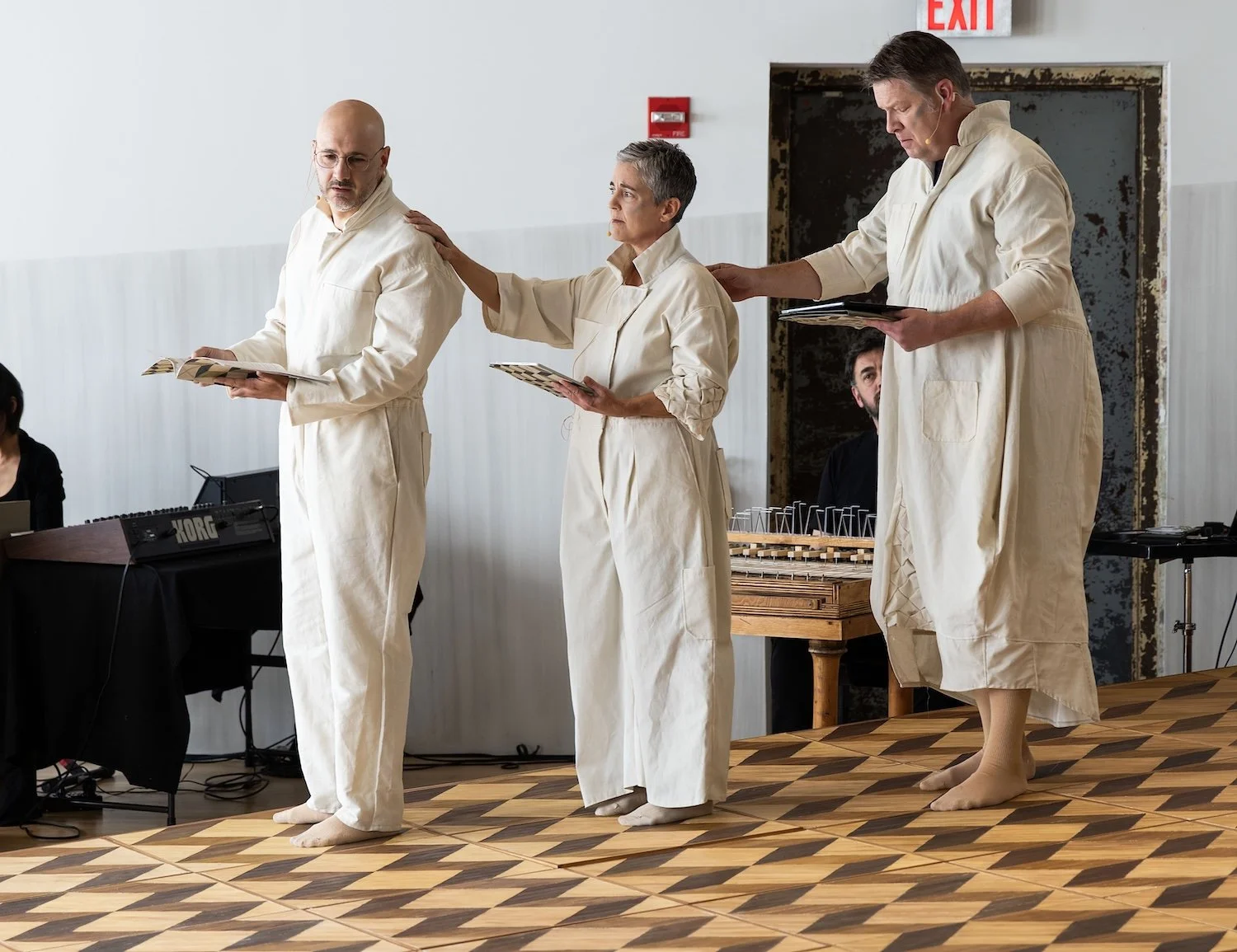
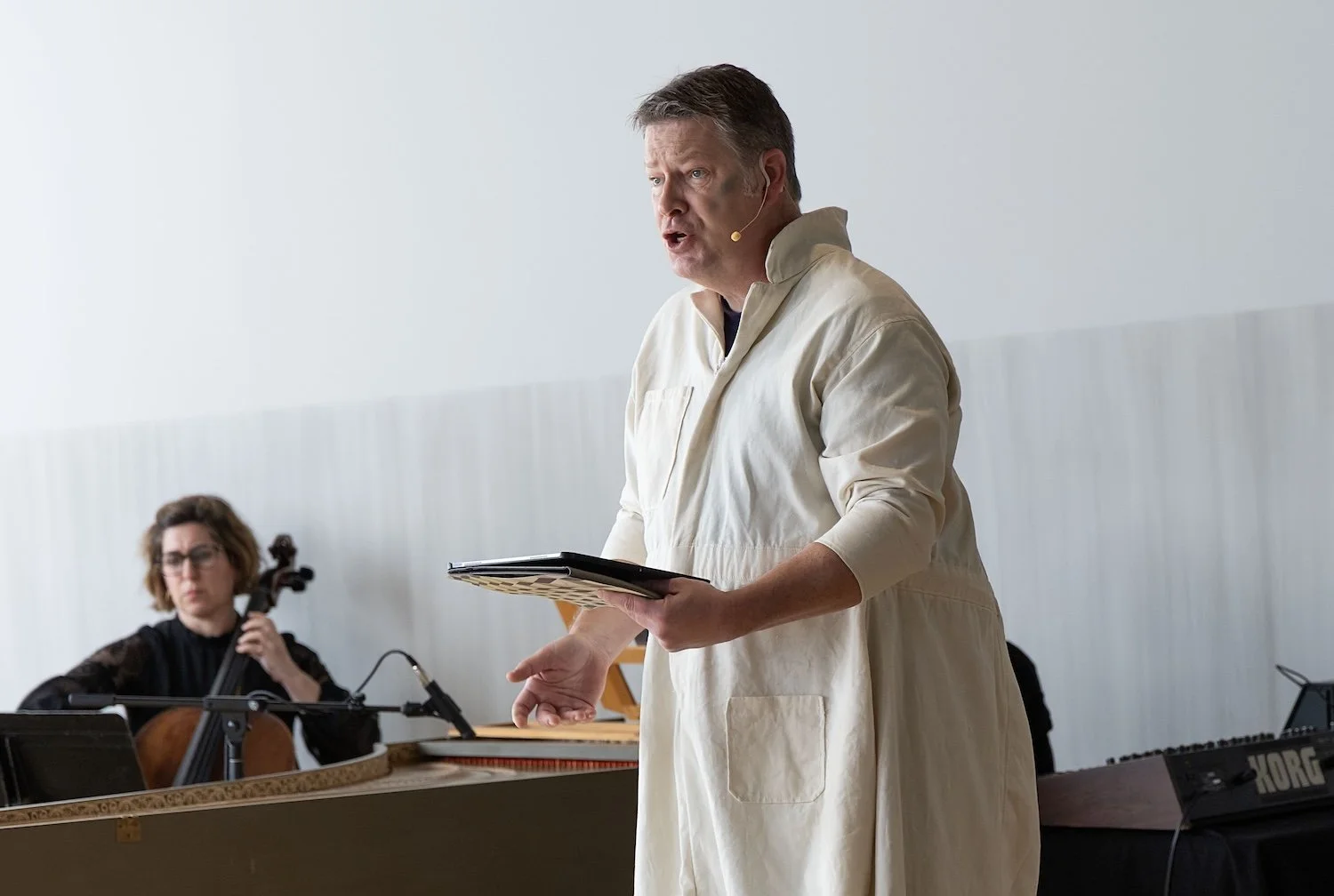
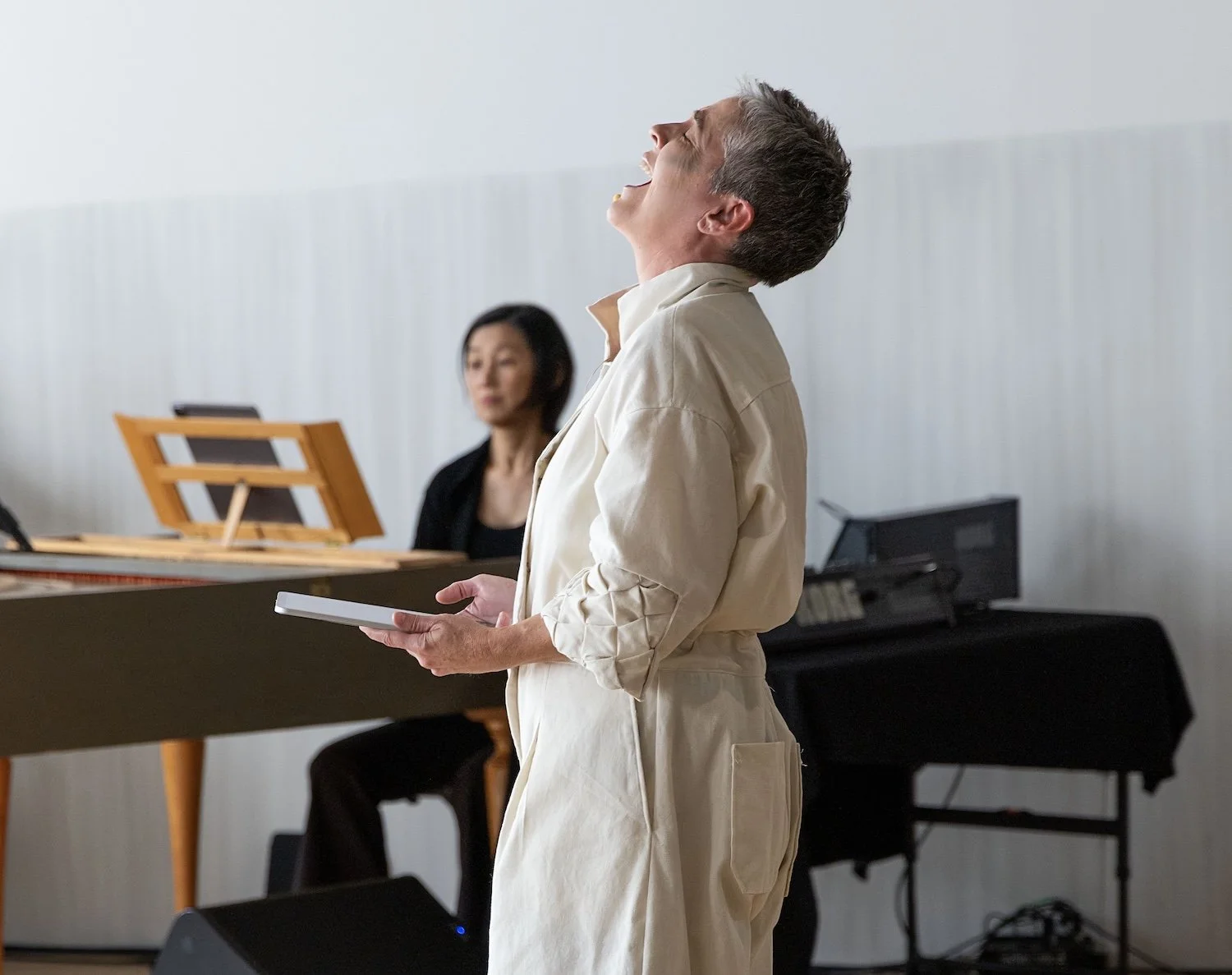
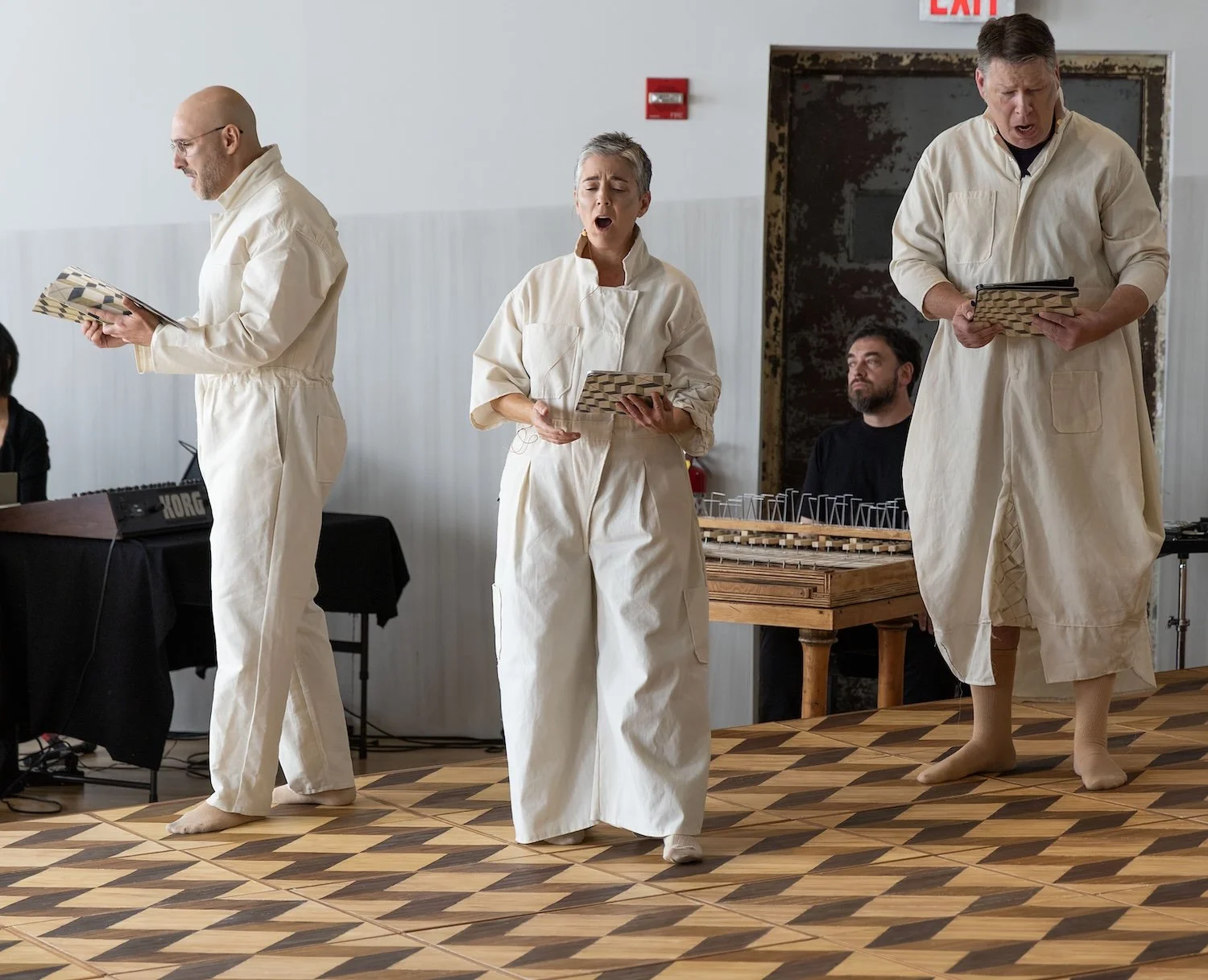
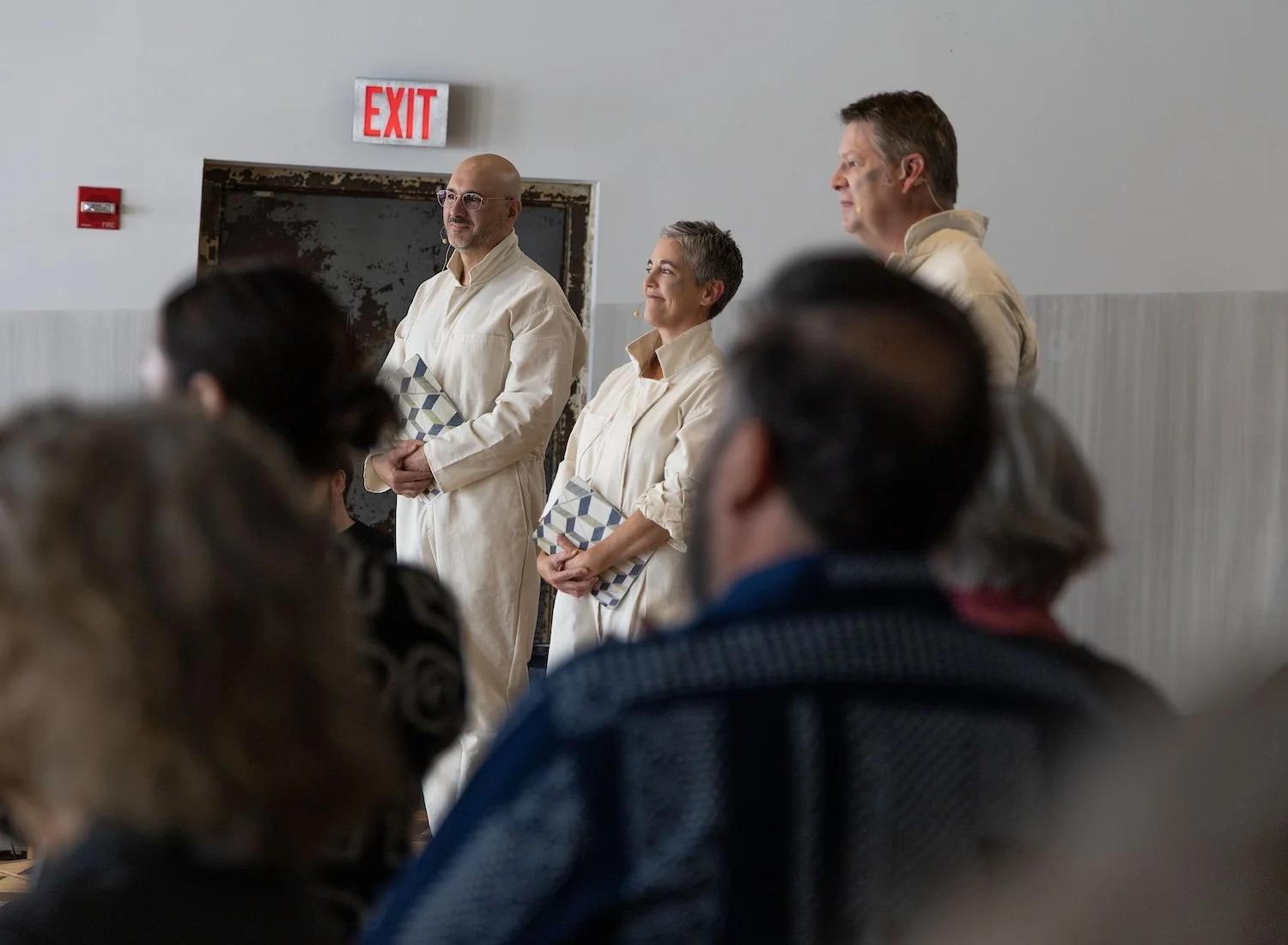
Staged on Hacia Cuando (To When), written by composer Jenny Olivia Johnson, and in collaboration with Javier Gustovo Bustos, Hacia Cuando (To When): An Opera debuted at Mass Moca on October 10th, 2026.
Since its conception, Hacia Cuando was envisioned in relation to the soulful, rhizomatic music of Jenny Olivia Johnson, and the poetics of sound of Javier Bustos. The opera brings our practices into communion with the traces left by visitors to the exhibition, incorporating the sound material gathered from their encounters with the work.
Conceived as a resonance box, Hacia Cuando listens to and amplifies the footsteps of visitors, revealing the sound of the material and the processes through which it was built. The soundscape moves between silence, as the platform listens and records, and moments when the footsteps of previous visitors return through the surface. Visitors never hear their own footsteps; instead, they encounter the traces of those who came before them. Each person leaves a trace that becomes part of another person’s experience, making participation tangible and transforming the work into a record of collective presence.
The Artists:
Jenny Olivia Johnson: Composer and Synthesizer
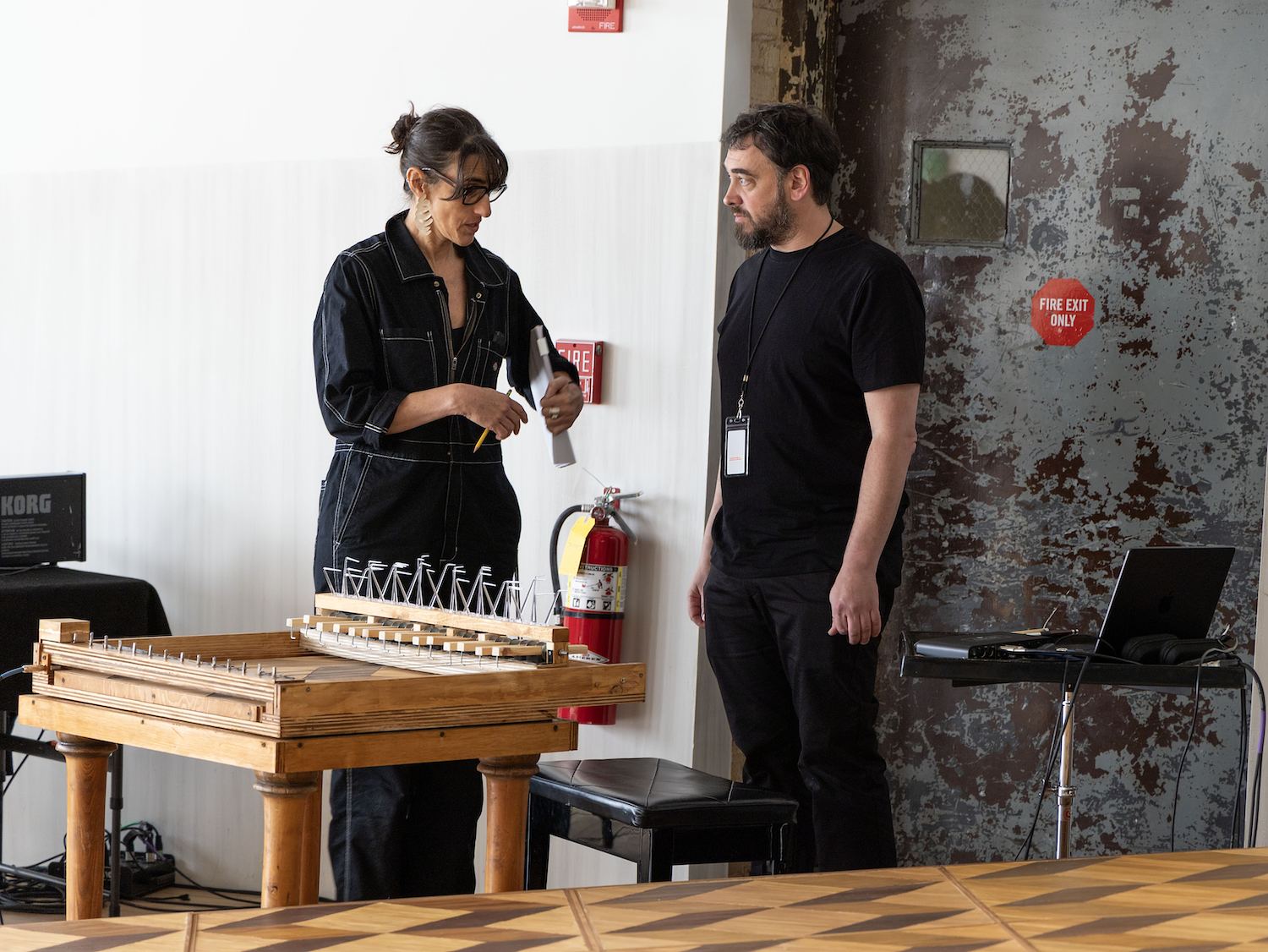
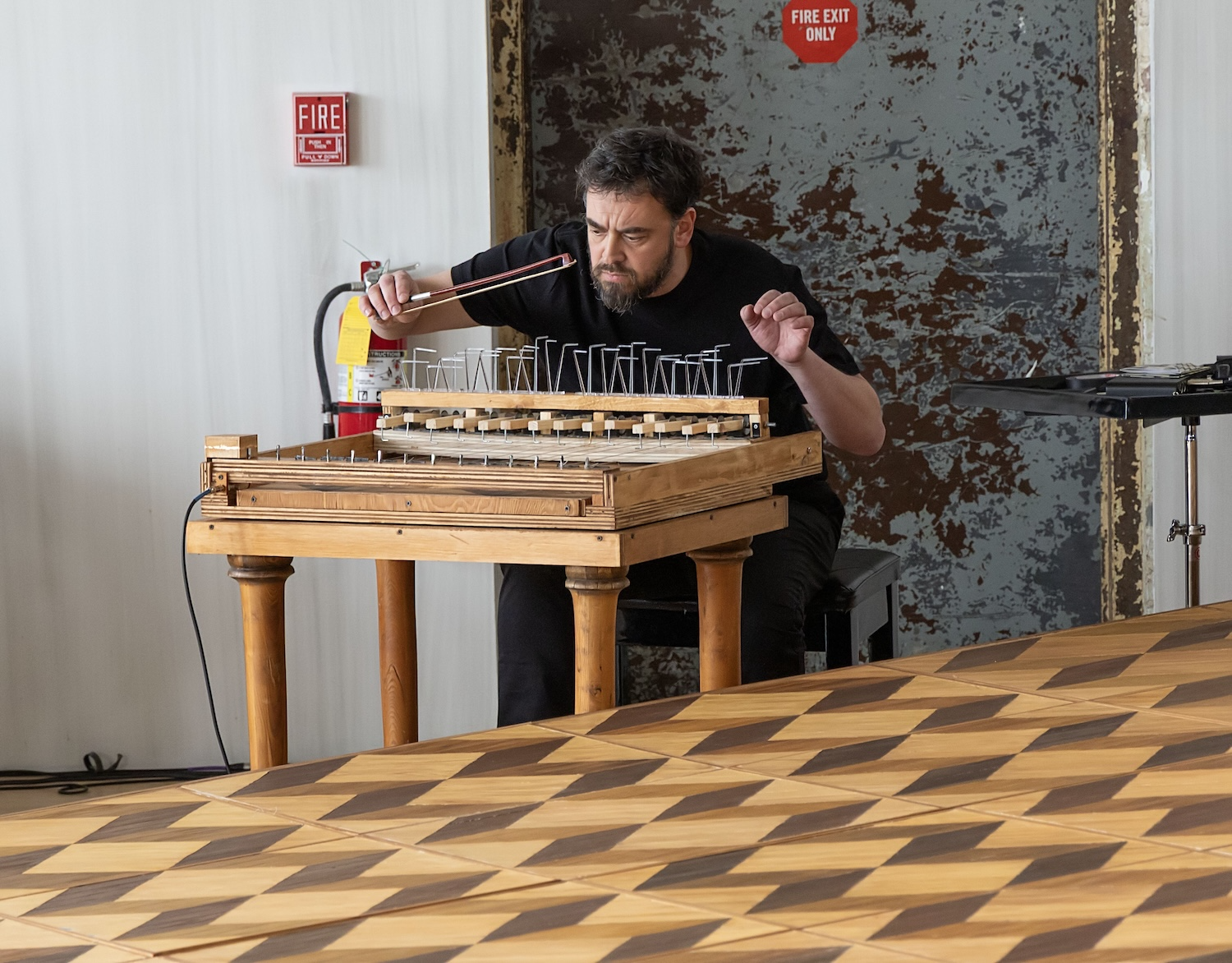
Javier Bustos: Experimental Luthier, sound artist and collaborator
Eliko Akahori: Harpsichord and Synthesizer
Nicolas Lartaun: Baritone
Felicity Salmon: Soprano
Somner Thompson: Tenor
Ashely Dao: Synthesizer
Michal Shein: Cello
Kelly Anona Kerrigan: Costume Designer
Photo credit for performance: Samara Pearlstein
From the Composer:
My dear friend Daniela Rivera asked me to write this opera for her astounding masterpiece “Hacia Cuando (To When),” which is currently being exhibited at the Massachusetts Museum of Contemporary Art (Mass MoCA).
From the very inception of Daniela’s work on this piece—which centralizes a gigantic, hand-built, fresco-painted floor, designed in a dazzling, dizzying chess board grid, tilted just slightly off the floor, playing with space and dimensions (and therefore time)—she envisioned an opera being performed on top of it.
(Indeed, the very name of the piece—"to when?”—invokes time: a core ingredient for musical performance, as well as for sitting with the hauntings of generational memory that Daniela’s work always beautifully, sometimes painfully, implies. An opera seems apt.)
(To be the one to compose its music—to be asked, to be called—I am humbled, and grateful.)
While I wrote this music largely in solitude, over the summer of 2026, this score reflects a deeply collaborative process between myself, Daniela, Javier Bustos, and Sebastian Muirhead, during the prior winter and spring months. As part of our initial creative process, Daniela and I asked Javier and Sebastian to compose an “exquisite corpse” poem with us—a poem written together, but such that only the last line of the previous author is seen by the next one. The result was a beautiful beginning for me: a stream of images and words in English and Spanish, opening many intriguing paths for me to follow.
One line in particular, written by Javier, began to haunt me: “there is a history of space that only shoes know.”
I began to wonder what our shoes might know about Daniela’s floor when they walk upon it. Daniela and Javier have wired it with microphones, allowing the sounds of visitors’ footsteps be amplified in real time throughout the space. These sounds are also, of course, being recorded: a sonic archive of the inevitable decay of the floor, from thousands of pairs of shoes over hundreds of days. This decay is invited: Daniela is etching a process onto this floor, just as she will etch the music of this performance onto vinyl: both are acoustic diaries, ridden with memory and noise.
(I know immediately I need to incorporate delay lines that seem to both go on forever, like Shepard tones, and also fall apart— completely smear into plasma, atoms, and electrons—in other words, to abide the second law of thermodynamics: entropy (entropia). “Everything falls down,” my high school chemistry teacher once intoned. It has become prayer for me.)
I then thought about the materials of the floor Daniela made: the wood and its history. I thought about the tree that the wood was sourced from; I imagined its death and its afterlife, as art. I heard the sounds of early instruments in my head: wood and gut vibrating, in temperaments far more complex than 12-equal. I decided to write for harpsichords, in 31-edo (31 divisions of the octave): a temperament not unlike just intonation, but with shadows haloing the triads and tertian harmonies.
I then turned to William Storz, a graduate student in musicology at UCLA, to talk about harpsichords (a passion of his). William told me that many historic wooden harpsichords are inscribed with the poem “I was alive in the woods / I was cut down by the cruel axe / While I was alive I was silent / In death, I sweetly sing.” I am so grateful to him for this sweet, haunted gem, which I have set in spiraling counterpoint.
This then led me to Federico Garcia Lorca’s spare, heartbreaking poem “Song of the Barren Orange Tree”: a plea from a lonely tree who longs to be freed from the torment of seeing itself without fruit. From there, the drama was born, and I followed it like a labyrinth, in spirals. You can hear them in the ground bass figure that encircles these musical tableaux, obsessively searching, walking the path that the shoes already know.
(Writing it over these past six weeks has provided a space of deeply important healing for me, from parental grief.)
I offer this opera of my grief, “an entropy opera in spirals,” to Daniela’s floor – and to entropy. To the atoms. To the electrons.
—Jenny Olivia Johnson